Management Turnover as Change Agent

Tuesday, April 10, 2012

Quarterly Executive Turnover Continues on a Tear

What a difference a year makes. For the last number of years, executive turnover at the top ranks of public companies was extremely low. As the nation and the world faced the huge financial crisis in 2008 and thereafter, companies were loath to change executives unless absolutely necessary but were often eager to layoff off general employees. For the last 12 – 14 months, Liberum Research has seen a real shift in the trend. Executive turnover overall has continued to rise while overall employment has finally showed signs, while tepid, of growth. Last week, ADP which tracks overall private employment, announced more positive news for the month of March. According to ADP’s latest Employment Report:
Employment in the U.S. nonfarm private business sector increased by 209,000 from February to March on a seasonally adjusted basis. Estimated gains for previous months were revised higher; the gain from December to January was revised up by 9,000 to 182,000, and the gain from January to February was revised up by 14,000 to 230,000. Employment in the private, service-providing sector increased 164,000 in March, after rising a revised 183,000 in February. Employment in the private, goods-producing sector rose 45,000 in March. Manufacturing employment added 23,000 jobs.
Later in that same week, the U.S.Labor Department released its employment numbers and to most analysts’ surprise, they were less than encouraging. Liberum expects the numbers will be revised upward but the lower than expected totals were a cause for some concern. According to the Bureau of Labor Statistics‘ employment numbers for March released on Friday, April 6,

Nonfarm payroll employment rose by 120,000 in March, and the unemployment rate was little changed at 8.2 percent, the U.S. Bureau of Labor Statistics reported today. Employment rose in manufacturing, food services and drinking places, and health care, but was down in retail trade.

Liberum has put together below a six plus year quarterly breakdown of executive turnover totals for CEOs, CFOs and C-level executives covering North America. Most of the below quarterly numbers showed continuing declines until the second quater of 2011. At this point, the numbers began to reverse themselves. Turnover at the executive levels of corporate America began to grow. Companies began again to consider new blood and often looked to change their corporate strategies as kernels of opportunity began to sprout ever so slightly. We also saw a number of major companies change leadership after major declines in revenues and/or profits.
GRAPHIC REPRESENTATION OF QUARTERLY KEY EXECUTIVE TURNOVER TOTALS
2005 – 2012


Monday, February 13, 2012

January Executive Turnover Continues to Grow

Liberum’s January 2012 executive turnover data has continued to show growing turnover within the executive ranks similar to what we have seen for most of the last ten months. January has actually seen a continuing positive trend with regard to the number of people filing new unemployment claims and, even more significantly, the economy has actually generated more jobs. On Friday February 3, the United States Department of Labor’s Bureau of Labor Statistics (BLS) announced its latest employment numbers. The news overall was pretty good, considering what most analysts had expected. The official unemployment rate dropped a modest 0.2% down to 8.3%. According to the BLS’s official Employment Situation Summary released Friday morning:

Total nonfarm payroll employment rose by 243,000 in January, and the unemployment rate decreased to 8.3 percent, the U.S. Bureau of Labor Statistics reported today. Job growth was widespread in the private sector, with large employment gains in professional and business services, leisure and hospitality, and manufacturing. Government employment changed little over the month.

The unemployment rate declined by 0.2 percentage point in January to 8.3 percent; the rate has fallen by 0.8 point since August. The number of unemployed persons declined to 12.8 million in January.

Liberum expects this trend will continue, while ever so slowly.

Below is a breakdown of the key executive category percentage increases for January 2012 compared with January a year earlier and the previous month of December 2011 and here again, the number totals were quite positive.

  • For January all four key categories saw increases, CEO changes increased a huge 191%, CFO changes increased 144%, overall C-level (as defined by Liberum Research as board of directors, CEOs, CFOs down to corporate VPs) changes increased 107% and board of director changes increased 11% as compared with January 2011 totals.
  • The month to month change in executive turnover was much smaller for December 2011 to January 2012. CEO changes increased 4%, CFO changes increased 21%, overall C-level changes increased 11% while board of director changes declined 5%.

Below are the key statistics for executive turnover for the month of January followed by graphs outlining the total turnover numbers for each key category.

JANUARY 2012 MANAGEMENT CHANGE STATISTICS

C-LEVEL MANAGEMENT CHANGE STATISTICS
GRAND TOTAL – 1855

TOP INDUSTRY SECTORS

> Energy – 175
> Drugs/Biotech – 146
> Banking – 145

JANUARY 2012 CEO CHANGE STATISTICS
GRAND TOTAL – 247

TOP INDUSTRY SECTORS

> Energy – 27
> Banking – 24
> Drugs/Biotech – 23

JANUARY 2012 CFO CHANGE STATISTICS
GRAND TOTAL – 207

TOP INDUSTRY SECTORS

> Energy – 19
> Drugs/Biotech – 18
> Metals/Mining – 15

JANUARY 2012 BOARD OF DIRECTOR CHANGE STATISTICS
GRAND TOTAL – 160

TOP INDUSTRY SECTORS

> Banking – 26
> Energy – 21
> Drugs/Biotech – 16

Tuesday, December 13, 2011

November Continues Growth Trend in Executive Turnover

Liberum’s executive turnover data for the month of November has continued to show growing turnover within the executive ranks similar to what we have seen for most of previous months this year. This trend was a complete reversal of what we saw for the previous two years. November’s increase in executive turnover took place while we saw a positive trend with regard to the number of people filing new unemployment claims and, even more significantly, the economy has actually generated more jobs. This is not say we are out of the woods with regard to overall employment and the economy but more positive employment signs continue to show up. In early December, the United States Department of Labor’s Bureau of Labor Statistics (BLS) announced the latest employment numbers. The official unemployment rate dropped a modest 0.4% down to 8.6%, the lowest rate since March 2009. There still remains 13.3 million people unemployed a seriously high number. The modest gain in employment is further tempered by the fact that according to BLS 315,000 people had given up looking for work. Even las t week we saw another drop in the number of people applying for unemployment.

Below Liberum has outlined in graphical format a November breakdown for CEO, CFO and overall C-level related turnover.

C-LEVEL RELATED CHANGES FOR NOVEMBER

Breakdown of November C-level changes includes internal, joingin from outside, leaving without clear explanation, promoted from within, resigned retired and terminated

CEO RELATED CHANGES FOR NOVEMBER

Breakdown of November CEO changes includes internal, joining from outside, leaving without clear explanation, promoted from within, resigned retired and terminated

CFO RELATED CHANGES FOR NOVEMBER

Breakdown of November CFO changes includes internal, joining from outside, leaving without clear explanation, promoted from within, resigned retired and terminated

For the month of November, CEO changes increased a huge 125%, CFO changes increased 111%, overall C-level (as defined by Liberum Research as board of directors, CEOs, CFOs down to corporate VPs) changes increased 94% while board of director changes declined 11% as compared with November 2010 totals. The month to month change in executive turnover on the other hand was negative for November 2011 when compared with October 2011 totals. CEO changes declined 12%, CFO changes declined 15%, overall C-level changes declined a mere 2% and board of director changes declined only 3%. Liberum expects the fourth quater of 2011 to show an increase over the same quater in 2010. Stay tuned.

Thursday, August 25, 2011

AMD Finally Fills CEO Post


After over six months of searching for a new CEO to replace former CEO Dirk Meyer, who resigned back in January and had been rumored to be forced out due to his lack of vision, AMD NASDAQ has finally chosen a new CEO. AMD has selected Rory Read, Lenovo’s President and Chief Operating Officer to lead the firm as its new CEO. AMD’s search for a new CEO has been painfully difficult. The semiconductor firm, which has managed somewhat of a resurgence while under the direction of former CEO, Dirk Meyer, and its current interim CEO, Thomas Seifert still has a difficult road to true recovery and long term survival. While AMD has been reasonably successful in the PC world as second banana to I

ntel, the company has very far to go with regard to processors for mobile phones and tablets the current growth generators. AMD has been through rough waters for sometime and many potential candidates have chosen not to be considered for the CEO position. Throughout the CEO search process a number of potential candidate names have been rumored under consideration including Tim Cook, Apple’s soon to be new CEO after Steve Jobs made his dramatic resignation, Mark Hurd, Oracle’s co-president and former HP CEO, Pat Gelsinger the Carlyle Group Chief Operating Officer and others have all apparently turned down AMD.

Read’s selection to run AMD is a positive, the company has finally found someone to take on the challenge. While Read has an impressive background while at Lenovo as well as significant leadership work while working at IBM for twenty three years he has a monumental task ahead of him. AMD’s press release announcement contained a terrific spin on Read’s selection. we will just have to wait and see. At least company now has a new leader and get to work on addressing many of the firm’s future needs and strategic direction.

Investors need to closely monitor what Read does upon taking the reigns and going forward.

Tuesday, July 19, 2011

Second Quarter Executive Turnover Shows Real Growth

With the end of the second quarter, the United States economy appears to have turned a major corner in relation to executive turnover. Executive turnover, as tracked by Liberum, has seen a continuing jump in the totals for June 2011 and the second quarter. The jump in turnover has been apparent when second quarter was compared with the same quarter in 2010 as well as in relation to the previous first quarter of 2011. The continuing jump in executive turnover appears to be at odds again with the level of employment and unemployment in the United States economy. Troubling signs for overall employment continue to haunt the U.S. economy as the recovery continues to limp along.

Now that we are finally seeing changes at the top of corporations, hope can increase that companies will finally begin to start hiring again. Liberum contends that the slow level of executive turnover over the previous number of years related to the reluctance corporate boards and top executives had to change top leadership during tough economic times except in situations where the firm in question performed so poorly that a top executive change was necessary or if a major strategic change change in strategy was needed. As we moved into 2011, we finally saw the level of unemployment bottom out.

Liberum expects that if the economy manages to recover, even ever so slightly, the level of executive turnover will continue to rise. Both the pent up demand for new top executives and the possibilities for new job opportunities will account for growing executive turnover. Also boards are expected to be more willing to make changes as the economy continues to move in a positive direction especially if the debt ceiling problem is resolved, even temporarily.

Below are three simple graphics outlining the quarterly management changes as registered through Liberum’s Management Change Database for 2008 through 2011 (second quarter) for CEO, CFO and overall C-level turnover. The first two quarters of 2011 dramatically illustrate the reversal in trends we have seen for a number of years. Executive turnover is again in the ascendancy. We expect this trend to continue unless the economy encounters some kind of major shock, lack of agreement on the debt ceiling, for example, a major sovereign bankruptcy (Greece) or something totally unforeseen.


Friday, June 24, 2011

Newell Rubbermaid Makes Wise Choice


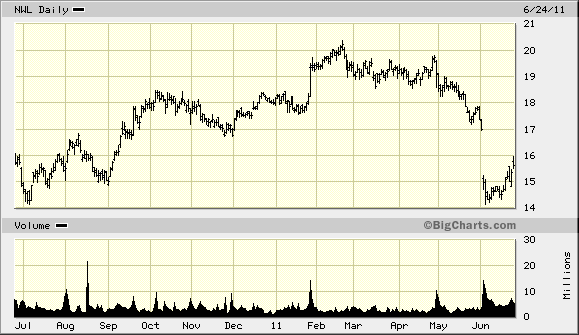
Newell Rubbermaid NWL (NYSE), the consumer products manufacturer, yesterday announced the selection of Michael Polk as its new CEO. Polk, currently the president of global foods, home and personal care at Unilever is also a member of Newell’s board ofdirectors. Polk will succeed Mark Ketchum who was selected as Newell’s CEO back in 2005. Ketchum back in January of this year announced his intention to retire. The firm hired a search firm to find a new CEO. Wisely, the firm selected a seasoned executive familiar with their business but with experience outside the firm. Polk, who is fifty years old comes in as CEO as Newell has failed to live up to expectations. While he has a difficult task ahead of him, he has both the skills and the drive to help find ways to make the firm perform better going forward.

Earlier today, thestreet.com’s Miriam wrote a piece expressing concern about expectations the new CEO will create about the firm. Remer wrote,

Jefferies analyst Douglas Lane cautioned that Polk will have his work cut out for him in managing expectations after Newell Rubbermaid recently trimmed its full-year outlook. The guidance revision came, in part, because of soft demand in some of Newell Rubbermaid’s consumer product categories such as baby and parenting.

I am not nearly as sanguine as the Jefferies’ analyst quoted. Polk has a real opportunity to shine in his new position. Stay tuned.


New updated article 7/12/11 – Globe and Mail’s David Milstead – Get ready for a nice bounce in Rubbermaid shares

Wednesday, May 11, 2011

Cisco CEO Can He and Should He Survive?


Cisco Systems, Inc. CSCO (NASDAQ), the one-time darling of investors, finds itself in difficulty. The company designs, manufactures, and sells Internet protocol (IP)-based networking and other products related to the communications and information technology industry worldwide. Back in early April, the company’s well known CEO, John Chambers, was forced to admit the company had problems. According to a story in BizJournals, Chambers wrote a memo in early April to his employees in which he stated,
“We have disappointed our investors and we have confused our employees. Bottom line, we have lost some of the credibility that is foundational to Cisco’s success – and we must earn it back.”
Chambers went on to state,
… he will “address with surgical precision what we need to fix in our portfolio.”
The growing problems facing Cisco were made more problematic yesterday, when Microsoft announced the purchase of Skype. While most analysts have focused on the problems Microsoft’s acquisition could mean for Google and Apple, Cisco is also at severe disadvantage from this latest acquisition and is in a weaker position than the others to respond. While Microsoft has not shown great success in the past when it came to telecom acquisitions and the ultimate execution or integration of the acquisitions, the purchase of Skype was a brilliant move. If Microsoft can make the acquisition work, it will be beneficial in many ways for the firm and may even make its arrangement with Nokia a real winner going forward. Cisco on the other hand, only has more competition and a greater need for righting its ship.

Investors can expect tremendous pressure on Chambers going forward. His reign at Cisco seems more and more tentative as we move forward. He needs to make changes in the company and fast. Stay tuned.

Thursday, April 14, 2011

First Quarter and March Executive Turnover Totals Reach Turning Point?

As March has come to an end and the first quarter of 2011 is behind us, the United States economy appears to have turned a corner. Executive turnover has seen a real jump in the overall totals in March 2011 for the first time in over three years. This jump coincided with the significant drop in United States unemployment and the continuing growth in the number of jobs being created. According to the Bureau of Labor Statistics which released March’s latest employment figures,
Nonfarm payroll employment increased by 216,000 in March, and the unemployment rate was little changed at 8.8 percent, the U.S. Bureau of Labor Statistics reported … Job gains occurred in professional and business services, health care, leisure and hospitality, and mining. Employment in manufacturing continued to trend up.
Not enough time has gone by, however, to predict these specific positive changes in the economy will continue. The possibility for new shocks to the economy such as oil prices, commodity prices, wars and unrest abroad as well as other unforeseen events continue to restrain possible growth in the overall economy and to make some investors weary.
The last four years have seen continuing dramatic declines in executive turnover and large increases in overall unemployment. While executive turnover jumped significantly in March, the totals for the first quarter of 2011 were far more sanguine and actually declined from the same quarter in 2010. When the 2011′s first quater turnover numbers are compared with the previous fourth quarter of 2010, however, the number totals were quite different and far more positive.

Liberum contends the slow level of executive turnover over the last number of years relates to the fact that corporate boards have been reluctant to change top leadership during tough economic times except in situations where the firm in question has performed so poorly that a top executive change was essential or if a major strategic change change in strategy was needed. Below are some illustrative statistics of the declining turnover in top executive ranks of public companies. As we entered the new year, we finally saw some positive news with regard overall employment in the US Economy.

Liberum expects that as the economy continues to recover, the level of executive turnover will continue to rise. Both the pent up demand for new top executives and the possibilities for new job opportunities will account for growing executive turnover. Also boards will be more willing to make changes as the economy continues to grow.

Below is a simple chart outlining the quarterly declines as registered through Liberum’s Management Change Database for 2008 through 2011 (first quarter) for CEO, CFO and overall C-level turnover. The first quarter of 2011 dramatically illustrates the recent change in turnover when the totals are compared to the previous fourth quarter of 2010. The trend line is beginning to change.

Investors should keep a close eye on what happens with executive turnover during April and May.


Tuesday, March 29, 2011

RealNetworks CEO Leaves in Midst of Turnaround


In what many analysts consider a surprise, Bob Kimball, RealNetworks' CEO and a real force in turning the troubled company in a new direction after little more than one year has abruptly resigned. So far, Kimball has not really commented on his move. According to the firm's press release outgoing CEO Kimball stated:

I took on this role to lead a restructuring and transformation of RealNetworks into a more lean, efficient and effective business and we have completed that phase of RealNetworks’ transformation. Over the past year we have simplified our business, removed more than $70 million in annualized operating expenses and created an entirely new, award-winning product called Unifi. We are delivering on our promise to build products people love. All this work has set the stage for Real to embark on its next phase with a clean bill of health and a strong foundation.
After 12 amazing years at Real, it is time for me to find new challenges and opportunities. I want to thank the Real team for their incredible work over the past 15 months – we’ve come a long way in a short time and I look forward to watching their success in the coming years.

In the meantime, until a permanent CEO is selected, RealNetworks appointed Executive Vice President Mike Lunsford to serve as interim CEO. The move change in leadership comes at a delicate moment in the firm's turnaround. Kimball who had been with the firm for over a decade before becoming its CEO replaced Rob Glaser, the company's founder. While in his leadership role Kimball according to a story by Brier Dudley for The Seattle Times,

The move comes as Real enters an intense several years that will test its plan to operate as a smaller company more focused on phone companies and other business customers, as well as games and consumer products.

During Kimball's tenure, the company also developed a new online media service that may compete with upcoming products from Google and Apple. But Real's stock has bobbed below $4 for most of Kimball's time as chief executive.

During 2010, sales fell 29 percent to $401.7 million and the company reported an operating loss of $34.5 million. Its gross margin improved to 64 percent, up from 60 percent the year before, when it lost $237.2 million.

All indications point to the firm finding a new CEO from outside the firm. Investors should keep a close eye on the company as it continues to find its footing.

Friday, February 25, 2011

Thinking Outside the Box is Not Always Best - Sears


Eddie Lambert, the once famed investor, who has been struggling for the last number of years trying to turn his controllinginvestment in Sears into something positive, just announced, after a three year search, the appointment of another new CEO. Lambert’s selection of Lou D’Ambrosio, a former IBM executive and CEO of Avaya, is another suspect out-of-the-box selection that has many people scratching their heads. D’Ambrosio an effective high-powered executive with substantial CEO and management experience primarily in the telecom and tech fields has no experience in retail. A lack of retail

experience would seem to be imperative for an organization like Sears. While D’Ambrosio has been working with Lambert and Sears as a consultant he is now going to be in charge. What can Lambert be thinking?


According to an article by Jeannine Poggi for TheStreet.com,

In a letter to investors, Lampert said D’Ambrosio is the right man for the job due to his “information and technology background, leadership style and experience in leading and transforming a Fortune 500 company.”
D’Ambrosio led Avaya as it went private, “delivering attractive returns to its shareholders,” Lampert wrote. This could be interpreted that Lampert’s real goal for Sears is to take the company private, not to bring it back to retail dominance.
Analysts are wondering once again what Lambert really has in mind. He claims to be relying on D’Ambrosio’s tech expertise to help the firm online and his previous expertise in taking Avaya private, two valid points but the firm remains a major brick and mortar retailer, so it is difficult to see how this appointment would be truly effective. In an ABC News Story more questions were raised about the CEO selection.
Many analysts say the move to a bigger online presence is a good one. They also believe D’Ambrosio could help Sears with mobile technology as more shoppers buy products from cell phones.
But Sears also has one of the largest brick-and-mortar footprints in North America, and one of the least productive. That makes D’Ambrosio a misguided choice, said Credit Suisse analyst Gary Balter and other analysts.
“While Sears has played the financial game well, and has smartly invested in the Internet, the store experience remains one lacking due to underinvestment in the basics of retailing,” Balter said.
Investors should keep a very close eye on Sears and its new CEO to try and get an idea what they might have up their sleeve. So far, it does not look that promising.